
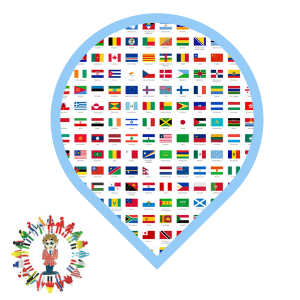
All languages spoken all over the world and official languages of all countries.
Why Did We Need Different Languages?
What is Language?
The language is a means of communication that emerges
when people make natural sounds meaningfully. It needs to be handled very
extensively. The reason for this is that there are thousands and many languages
that die (that no longer speaks now) that emerged after humanity established a
civilization.
Today, it is thought that more approximate 7 thousand
languages are spoken on the world. Some of these languages are spoken at the
local level and even only in a village, and languages that are frequently
preferred and spoken in the national or international arena are also available.
When considered from this point of view, it is anticipated that there be many
languages that have not yet been detected on the world. Today, there are 51
languages that are spoken by a person and about to die. According to a research done by United
Nations; 198 languages in India, 198 in the United States of America, and 108
in Australia were included in the class of languages that have disappeared.
This shows us that languages also live like a human being and die when there is
no longer spoken. In this context, it would not be wrong to say that language
is a living being. Depending on the issue, UNESCO has determined that at least
10 languages die every year. At least 10 cultures die every year in the world
and are irreversibly lost.
Another dimension of the concept we call language is
the sign language used by disabled persons who cannot use their linguistic
skills. There are also differences in this language like other languages.
Studies have been carried out for a common sign language, but unfortunately a clear
conclusion has not been reached. Furthermore, the programs we use in almost
every field have a language. Programs work in their subtexts in a
software-dependent manner. Each command you issue in the main menu corresponds
to a language in the brain of the program running at the bottom. Thus your
command is detected by the main center of the program and starts running.
How Did the Language Come About?
No exact finding has yet been reached on how languages
emerged. However, the science world is trying to make sense of how we humans
started to speak by producing various theories on this subject. We can list
these theories as follows;
-Emulation/Imitation:
The first people began to speak and create the languages of today by imitating
the sounds they hear in nature. Max Müller also has a philologist/researcher of
contemporary age as well as Ancient Greek philosophers such as Plato and
Demorit, who embraced this theory Explosion, cracking etc. sounds in Turkish
language are known as reflection sounds.
-Pooh Theory: It is the
theory that sounds that result from the involuntary expression of movements
expressing emotional states such as sadness, tiredness, rejoicing, and
excitement are the source of speech.
-Business Theory
Together: People had to work together to survive. As a result of the tempo that
they held while doing business among themselves, speaking activities
developed.
-Divine Theory:
According to this theory; people have come to the forefront with these features
since they first appeared. In short, the concept we talk about is an activity
that has been going on since the first person.
-Social Agreement: It
is a theory that people need to speak in order to understand socially and that
languages are also developed in this way. The advocates of this are Adam Smith,
J.J. Rousseau and Belle who are Age of Enlightenment philosophers.
Why have Different Languages Emerged?
The journey of human beings to explore the world has
taken thousands or even millions of years. Correspondingly, we are so far from
our state in the territories we first came out. Every tribe has gone to
different points of the world, has made many discoveries that will contribute
to it and has formed their own culture as a result of all this. The language
has emerged as a reflection of their culture in the light of this information.
It was not possible for the tribes, who were in different positions from each
other, to communicate depending on the conditions of that period. Therefore,
every tribe or community has created its own language. Of course, some
languages remained as cognate and have maintained this relationship until
today. For example, German and English are very closely cognate
languages.
The Most Powerful Languages on the World
Interesting research on language was shared in the
World Economic Forum held in Davos, Switzerland every year. In the research,
factors such as geography, economy, communication, information and media,
diplomacy were taken into consideration. Accordingly, the strongest language in
the world was English. Turkish was ranked 18th in this research. Half of the
world's population speaks 15 languages in a widespread manner.
What is Linguistics?
The linguistics is a science that distinguishes
mankind from other living things and that studies all the movements that occur
depending on this concept. There are notable scientists such as Noam Chomsky,
Ludwig Wittgenstein. It is a science that combines languages and
anthropology.
Result
The phenomenon we call language covers a very large
area. It is a fact that people are affected by many events and objects.
Although many theories about the subject have been put forward, it has not been
determined scientifically as the source of the languages and the reason why
they are so many. While more than a hundred languages are spoken on very small
island, only one language can be spoken in areas of thousands of times its
size. This status shows that language is still a mysterious being.
Languages Spoken in Countries, Which
Language is Spoken in Which Country
United States of America, Anguilla, Antigua, Barbados, Australia,
Bahamas, Belize, Bermuda, United Kingdom, Botswana, Dominica, Eritrea,
Ethiopia, Falkland Islands, Fiji, Philippines, Gambia, Ghana, Gibraltar, Granada,
Guam, Guernsey, Guyana, South Africa, India, British Virgin Islands, Ireland,
Israel, Jamaica, Jersey, Cameroon, Canada, Kenya, Kiribati, Kokola, Cook
Islands, Northern Mariana Islands,
Lesotho, Liberia, Malawi, Malta, Mauritius, Micronesia, Montserrat, Namibia,
Nigeria, Norfolk Islands, Pakistan, Palau, Papua New Guinea, Pitcairn Islands,
Rwanda, Saint Helena, Seychelles, Singapore, Sierra, Lone, Somalia, Swaziland,
Trinidad, Tobago, Turks and Caicos Islands, Uganda, Vanuatu, Zambia, Zimbabwe,
Marshall Islands.
Spanish-Speaking Countries:
Argentina, Bolivia, Dominican Republic, Ecuador,
Ecuadorian Guinea, El Salvador, Guatemala, Honduras, Spain, Colombia, Costa
Rica, Cuba, Mexico, Nicaragua, Panama, Paraguay, Peru, Porto Rico, Chile,
Uruguay, Venezuela, Andorra, Belize, Morocco, Philippines.
French-Speaking Countries:
Andorra, Benin, Burkina, Chad, Djibouti, France,
French Guiana, French Polynesia, Gabon, Guinea, Haiti, Switzerland, Italy,
Canada, Congo, Luxembourg, Madagascar, Mali, Martinique, Monaco, Niger, Central
African Republic, Rwanda, Senegal, Togo, Wallis and Futuna, New Caledonia,
Zaire, Belgium, Algeria, Lebanon and Tunisia.
Arabic-Speaking Countries
Bahrain, Western Sahara, United Arab Emirates,
Algeria, Morocco, Palestine, Iraq, Qatar, Comor Islands, Kuwait, Libya,
Lebanon, Egypt, Mauritania, Somalia, Sudan, Syria, Saudi Arabia, Tunisia, Oman,
Jordan, Yemen, Eritrea and Tanzania.
German-Speaking Countries:
Germany, Austria, Belgium, Denmark, Switzerland,
Liechtenstein and Luxembourg.
Azerbaijani-Speaking Countries:
Azerbaijan, Armenia and Iran.
Italian-Speaking Countries:
Argentina, Italy, Croatia, San Marino, Switzerland,
Slovenia, Eritrea.
Japanese-Speaking Countries:
Japan.
Kazakh-Speaking Countries:
Kazakhstan.
Kyrgyz-Speaking Countries:
Kyrgyzstan.
Khmer-Speaking Countries:
Cambodia, Kinyarwanda, Runda, Kirundi and Burundi.
Afghan and Dari-Speaking Countries:
Afghanistan.
Indonesian-Speaking Countries:
Indonesia.
Armenian-Speaking Countries:
Armenia, Iran, Lebanon and Syria.
Estonian-Speaking Countries:
Estonia.
Lithuanian-Speaking Countries:
Lithuania.
Hungarian-Speaking Countries:
Hungary.
Macedonian-Speaking Countries:
Macedonia.
Malay-Speaking Countries:
Brunei, Malaysia, Singapore and Indonesia.
Uyghur-Speaking Countries:
China, Kazakhstan, Afghanistan.
Vietnamese-Speaking Countries:
Vietnam.
Greek-Speaking Countries:
Greece, Greek Cypriot Administration of Southern
Cyprus, Albania.
Albanian-Speaking Countries:
Albania.
Countries That Speak African Local Languages:
Namibia, Zambia.
Hebrew-Speaking Countries:
Israel.
Persian-Speaking Countries:
Iran, Iraq, Qatar and Tajikistan.
Dutch-Speaking Countries:
Aruba, Belgium, Netherlands, Netherlands Antilles and
Suriname.
Filipino-Speaking Countries:
Philippines.
Finnish-Speaking Countries:
Finland, Sweden and Russia.
Georgian-Speaking Countries:
Georgia.
Hindi-Speaking Countries:
India.
Swedish-Speaking Countries:
Sweden.
Catalan-Speaking Countries:
Andorra.
Tajik-Speaking Countries:
Tajikistan.
Thai-Speaking Countries:
Thailand.
Turkish-Speaking Countries:
Turkey, TRNC, Azerbaijan.
Turkmen-Speaking Countries:
Turkmenistan.
Ukrainian-Speaking Countries:
Ukraine.
Urdu-Speaking Countries:
Pakistan, India.
Bengali-Speaking Countries:
Bangladesh.
Bulgarian-Speaking Countries:
Bulgaria.
Burmese-Speaking Countries (Myanmar):
Burma.
Belarusian-Speaking Countries:
Belarus.
Chinese-Speaking Countries:
China and Taiwan.
Chechen-Speaking Countries:
Chechnya.
Czech-Speaking Countries:
Czech Republic.
Danish-Speaking Countries:
Denmark, Greenland.
Faroese-Speaking Countries:
Faroe Islands.
Norwegian-Speaking Countries:
Norway.
Uzbek-Speaking Countries:
Uzbekistan.
Pashto-Speaking Countries:
Afghanistan.
Pidgin English-Speaking Countries:
Papua New Guinea.
Korean-Speaking Countries:
South Korea, North Korea.
Lao-Speaking Countries:
Laos
Maldivian-Speaking Countries:
Maldives
Maltese-Speaking Countries:
Malta
Mongolian-Speaking Countries:
Mongolia.
Moldavian-Speaking Countries:
Moldova.
Nepali-Speaking Countries:
Nepal.
Polish-Speaking Countries:
Poland.
Portuguese-Speaking Countries:
Angola, Brazil, Cape Verde, Guinea-Bissau, Macau,
Mozambique, Portugal, São Tomé and Príncipe, France.
Punjabi-Speaking Countries:
Pakistan.
Romanian-Speaking Countries:
Romania and Moldova.
Russian-Speaking Countries:
Russia, Estonia, Israel, Kazakhstan, Kyrgyzstan,
Latvia, Lithuania, Moldova and Ukraine.
Serbian-Speaking Countries:
Bosnia and Herzegovina, Croatia, Serbia, Austria.
Sinhala-Speaking Countries:
Sri Lanka.
Slovak-Speaking Countries:
Slovenia.
Somali-Speaking Countries:
Somalia.
Swahili Speaking Countries:
